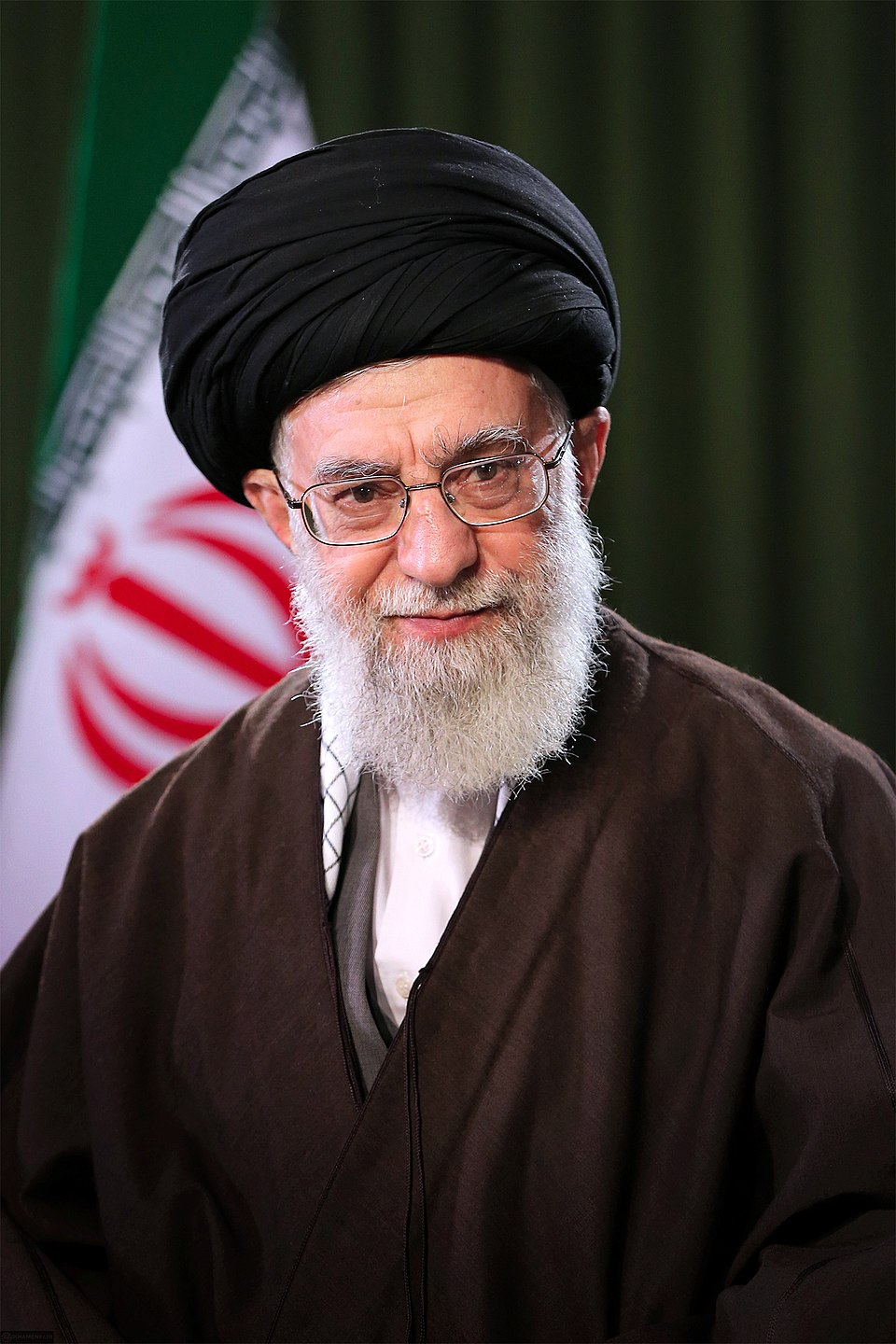
The news reverberating across Iran and the global Shia Muslim community, indicating that Ayatollah Ali Khamenei, the Supreme Leader, is to be Khamenei to Be Buried in Holy City of Mashhad, Iranian Media Reports, carries immense religious, historical, and political weight. This decision is far more than a mere logistical arrangement; it is a profound statement, connecting his legacy directly to the spiritual heartland of Iran. Mashhad, a city already hallowed by millions, is set to become the final resting place for a leader who steered the Islamic Republic for decades, further cementing its unique position in the nation's spiritual and political landscape.
Khamenei, who led the Iranian regime for 36 years before his passing at 86, was originally from Mashhad, a detail that adds a deeply personal layer to the choice of his burial site. This return to his hometown, where his father is also interred at the revered Imam Reza shrine, speaks volumes about heritage, piety, and the intertwining of personal history with national destiny. The decision for Khamenei's Final Resting Place: Mashhad, His Hometown and Family Shrine is meticulously symbolic, reflecting a deliberate intention to align his enduring presence with one of the most sacred sites in the Shia Islamic world.
Mashhad: A Beacon of Shia Islamic Devotion
To understand the profound significance of why Khamenei is to be buried in Mashhad, one must first appreciate the city's unparalleled spiritual status within Shia Islam. Mashhad is not merely Iran's second-largest city; it is widely considered the country's spiritual capital, a beacon of devotion for millions worldwide. Its veneration stems from being home to the Shrine of Imam Reza (AS), the eighth Imam of Twelver Shia Islam, and a direct descendant of Prophet Muhammad. The shrine complex is an architectural marvel and a spiritual powerhouse, drawing an estimated 25 to 30 million pilgrims annually from across Iran and the globe. These pilgrims undertake arduous journeys, seeking blessings, healing, and spiritual solace at the tomb of Imam Reza, who was martyred in the 9th century and is revered as a living presence.
The very name Mashhad means "place of martyrdom," signifying its sacred origins. For centuries, it has served as a pivotal center for religious learning, attracting scholars, theologians, and students. Its libraries hold invaluable manuscripts, and its seminaries have produced countless religious leaders. The atmosphere of Mashhad is imbued with piety and reverence, with the golden dome and minarets of the Imam Reza shrine dominating the skyline and the city's spiritual rhythm. For a leader like Khamenei, deeply rooted in religious authority and legitimacy, choosing this holy city as his final resting place is an eloquent declaration of his profound connection to Shia traditions and his desire for his legacy to be eternally linked with its holiest ground. The decision underscores the belief that to be interred near an Imam is to be blessed and to elevate one's spiritual standing, a concept deeply cherished in Shia eschatology.
Khamenei's Personal and Familial Connection to the Holy City
Beyond its universal religious significance, Mashhad holds a deeply personal resonance for Ayatollah Ali Khamenei. It was his birthplace and the setting for much of his formative years, a fact that imbues his burial choice with a powerful sense of returning to one's origins. Born in Mashhad in 1939, Khamenei grew up steeped in the city's spiritual environment, attending its religious schools and commencing his theological studies there. His father, Ayatollah Sayyid Jawad Hosseini Khamenei, a revered cleric, is also buried within the sacred precinct of the Imam Reza shrine. This familial tie provides a poignant and understandable rationale for his choice of burial site; it is a homecoming, a reunion with his lineage within a space that holds profound personal and collective significance.
This personal connection is not merely sentimental; it reinforces his legitimacy and piety within the Iranian context. By opting to be interred alongside his father, near the shrine of Imam Reza, Khamenei solidifies his image as a man deeply connected to tradition, family, and the spiritual bedrock of his faith. It communicates a message of humility and devotion, demonstrating a desire to rest not in a grand, purpose-built mausoleum that might emphasize his political power, but in a place consecrated by centuries of religious veneration and familial ties. This choice resonates powerfully with the Iranian populace, many of whom cherish the idea of family and spiritual succession, viewing his return to Mashhad as a demonstration of rootedness and a profound respect for heritage. It’s a powerful narrative of returning to the sacred earth from which he sprang, enhancing the spiritual aura surrounding his leadership and final journey.
The Strategic Symbolism: Blending Legacy with Divinity
The decision for khamenei buried mashhad is laden with strategic symbolism, serving to inextricably link his leadership and legacy with the very essence of Shia Islam. By choosing Mashhad, Khamenei ensures that his final resting place is not merely a memorial but an integral part of one of the most revered pilgrimage sites in the world. This move strategically positions his historical narrative within a divine context, lending an unparalleled spiritual authority and permanence to his persona even after his passing. Unlike Ayatollah Ruhollah Khomeini, the founder of the Islamic Republic, who is interred in a grand mausoleum in Tehran – a distinctly political and national capital – Khamenei's choice underscores a different emphasis: a profound spiritual connection that transcends mere political geography.
This decision sends several potent messages. Firstly, it reaffirms the intertwining of religious and political authority that is foundational to the Islamic Republic. By being interred in Mashhad, Khamenei's legacy is physically embedded within a holy site, suggesting that his guidance and leadership were not merely temporal but divinely inspired and sanctioned. Secondly, it strengthens Mashhad's status, not just as a religious hub, but also as a site of national importance, drawing future generations of Iranians to reflect on both spiritual devotion and the history of their revolution. Finally, it provides a powerful symbol for his followers, encouraging continued allegiance to the path he championed by associating it with the sacredness of Imam Reza. His grave will undoubtedly become a secondary point of pilgrimage for many, drawing those who seek blessings not only from the Imam but also from the Supreme Leader who guided the nation in his name. This strategic alignment ensures that his influence will continue to emanate from the spiritual heartland of Iran, cementing his place in both religious and national memory.
Anticipating the Burial: A National and Spiritual Event
The announcement that khamenei buried mashhad promises to transform the holy city into the epicenter of national and spiritual mourning. While specific dates have not been disclosed, the event is anticipated to be an occasion of unprecedented scale, drawing millions of mourners and dignitaries. A state funeral for a Supreme Leader is an intricate affair, combining traditional Islamic rites with national ceremonial protocols. The procession, likely starting from Tehran, would involve immense crowds paying their respects, mirroring the historical and emotional outpouring witnessed during the funeral of Ayatollah Khomeini.
Upon arrival in Mashhad, the city will undoubtedly experience an influx of pilgrims and mourners, all seeking to participate in the final rites and to offer their condolences. The logistics of managing such a colossal gathering, ensuring security, and facilitating the spiritual aspirations of millions will be a monumental task for Iranian authorities. The Imam Reza shrine complex, already equipped to handle vast numbers, will become the focal point, though surrounding areas will also be utilized. For the Iranian people, and indeed for Shia Muslims globally, this burial will be a moment of profound reflection, a communal experience of grief, remembrance, and reaffirmation of faith. It will mark the end of an era and the beginning of a new chapter, with the spiritual resonance of Khamenei's final resting place in Mashhad serving as a constant reminder of his enduring impact on the nation and its religious identity. This event will solidify Mashhad’s role not just as a religious capital, but also as a powerful site of national memory and historical significance.
The decision for khamenei buried mashhad is a multi-faceted choice, rich in religious, personal, and political symbolism. It underscores the profound spiritual significance of Mashhad as the resting place of Imam Reza and highlights Khamenei's deep familial ties to the city. By choosing to be interred in this holy ground, he has ensured his legacy is intertwined with the spiritual fabric of Iran, reinforcing the connection between the Islamic Republic's leadership and its most sacred traditions. This act will not only cement Mashhad's status as a spiritual beacon but will also serve as a powerful statement, shaping the narrative of his enduring influence for generations to come.