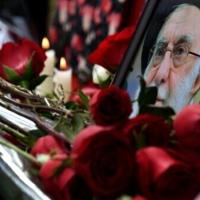
Khamenei to Be Buried in Holy City of Mashhad, Iranian Media Reports
In a significant development that will reverberate across Iran and the Middle East, Iranian media outlets have widely reported that the late Supreme Leader, Ayatollah Ali Khamenei, will be laid to rest in the holy city of Mashhad. This announcement follows reports of his passing, with the Fars news agency, among others, stating that he was killed in US-Israeli strikes. The decision to have Ayatollah Khamenei buried in Mashhad, Iran's second-largest city, holds profound religious, historical, and personal significance, marking a pivotal moment in the nation's contemporary history.
Ayatollah Khamenei, who served as Iran's Supreme Leader for 36 years and passed away at the age of 86, has a deep connection to Mashhad. It is his city of origin, where his family roots are firmly established, and notably, where his father is buried within the revered Imam Reza shrine complex. While no specific date for the burial has been publicly disclosed, preparations for what is expected to be a monumental funeral and mourning period are undoubtedly underway, drawing global attention to this sacred site.
Mashhad: A Sacred Choice for a Supreme Leader's Final Resting Place
The selection of Mashhad as the final resting place for Ayatollah Ali Khamenei is far from coincidental; it is a choice imbued with layers of religious sanctity, personal history, and national identity. Mashhad, meaning "place of martyrdom," is the spiritual heartland of Iran for many Shi'ite Muslims, primarily due to it housing the Imam Reza shrine. This magnificent complex is the resting place of Imam Reza, the eighth Shi'ite Imam, and a direct descendant of the Prophet Muhammad. Millions of pilgrims from Iran and around the world visit the shrine annually, seeking spiritual solace and blessings.
For a figure of Ayatollah Khamenei's stature, being buried in such close proximity to Imam Reza signifies a powerful endorsement of his spiritual leadership and adherence to Shi'ite principles. It connects his legacy directly to the lineage of the Imams, reinforcing his position within the religious hierarchy of Iran. Furthermore, his personal ties to Mashhad make this choice deeply poignant. Born in Mashhad, he spent his formative years there, immersed in its vibrant religious and intellectual atmosphere. His father, Ayatollah Seyyed Javad Khamenei, a respected cleric, is also interred within the Imam Reza shrine, adding another personal dimension to the decision. This familial link ensures that the Supreme Leader's resting place is not merely a political statement but a return to his spiritual and ancestral home.
The decision underscores the intertwining of religious belief with state leadership in Iran. By choosing Mashhad, the leadership signals a continuity of the Islamic Republic's foundational principles and reinforces the religious legitimacy of its institutions. It also transforms Mashhad into an even more significant pilgrimage site, as it will now encompass the tombs of both a venerated Imam and a long-serving Supreme Leader, solidifying its place as a cornerstone of Shi'ite reverence.
The Illustrious Legacy of Ayatollah Ali Khamenei
Ayatollah Ali Khamenei's passing marks the end of an era defined by his formidable leadership, which spanned 36 years following the death of the Islamic Republic's founder, Ayatollah Ruhollah Khomeini, in 1989. Assuming the role of Supreme Leader at a critical juncture, Khamenei steered Iran through decades of complex domestic challenges, intense regional rivalries, and profound international pressure, including sanctions and diplomatic isolation. His tenure was characterized by a steadfast commitment to the principles of the Islamic Revolution, consolidating the unique political and religious system that governs Iran.
Born in Mashhad in 1939, Khamenei was a close confidant of Ayatollah Khomeini and played a crucial role in the Iranian Revolution. His journey from an ardent revolutionary to the nation's ultimate authority figure is a testament to his resilience and political acumen. During his leadership, he oversaw significant developments in Iran's nuclear program, its regional influence through proxy groups, and a period of both economic growth and hardship. He was instrumental in shaping Iran's foreign policy, often standing firm against Western influence while advocating for what he perceived as Islamic values and national sovereignty.
His legacy is multifaceted, viewed differently both within Iran and internationally. Supporters credit him with maintaining stability and defending the revolution's ideals against external threats. Critics, however, point to human rights concerns and economic struggles under his rule. Regardless of perspective, his impact on Iran's trajectory and its role on the global stage is undeniable. His age at death, 86, speaks to a long and influential life dedicated to the service of the Islamic Republic, leaving behind a complex political and religious inheritance for his successor.
Preparing for a State Funeral: Logistics and National Mourning
The burial of a Supreme Leader is an event of immense national and international significance, triggering a series of elaborate state protocols and a period of intense public mourning. While the exact date for Ayatollah Khamenei's burial in Mashhad remains undisclosed, the nation is preparing for extensive funeral rites, which typically involve mass public processions that draw millions of mourners.
Given Mashhad's status as a major pilgrimage city and its limited infrastructure for handling such an immense influx of people, the logistical challenges will be substantial. Security will be paramount, and the coordination of millions of individuals traveling to and within Mashhad will require meticulous planning by Iranian authorities. It is expected that the funeral proceedings will begin with initial ceremonies in Tehran, allowing a broader segment of the population to pay their respects, before the Supreme Leader's body is transported to Mashhad for the final interment.
The period of national mourning will see government offices, schools, and businesses observe closures, and state media will dedicate extensive coverage to Khamenei's life and legacy. This collective outpouring of grief is not just a religious or cultural tradition but also a significant political event, demonstrating national unity and reverence for the leadership. For those planning to visit Mashhad or Iran in the immediate aftermath of this announcement, it is crucial to stay updated on travel advisories and local regulations, as major disruptions and heightened security measures are highly probable. The global media will closely observe these events, analyzing their implications for Iran's future leadership and regional stability. For more detailed insights into the chosen location, you can read about Khamenei's Final Resting Place: Mashhad, His Hometown and Family Shrine.
The Symbolism of a Leader's Final Journey
The choice of a burial site for a national leader, particularly one of Ayatollah Khamenei's stature, is never merely a logistical decision; it is deeply symbolic, intended to convey messages that resonate across generations. By choosing Mashhad, Ayatollah Khamenei's final journey becomes a powerful narrative of homecoming, spiritual alignment, and the perpetuation of the Islamic Revolution's ideals.
His interment near the Imam Reza shrine reinforces the intertwining of religious authority and political power, a cornerstone of the Islamic Republic. It symbolically places the Supreme Leader under the spiritual guardianship of the Imams, lending further legitimacy to his rule even in death. This act transforms his tomb into a potential site of pilgrimage for his followers, ensuring that his legacy remains an active and tangible force in Iranian religious and political life. The location also underscores the personal narrative of a leader who, despite decades at the helm of a nation, maintained a deep connection to his origins and the spiritual heart of his faith. This final journey to Mashhad serves as a profound testament to his identity as a servant of both the Iranian nation and the Shi'ite faith.
Conclusion
The announcement that Ayatollah Ali Khamenei will be buried in the holy city of Mashhad marks a significant moment in Iran's history. This decision is rich with spiritual, historical, and personal meaning, connecting the long-serving Supreme Leader to his roots and to the revered Imam Reza shrine. As Iran prepares for a period of national mourning and the logistical challenges of a state funeral, the world watches, recognizing the profound impact of this transition on the nation and the broader geopolitical landscape. His final resting place in Mashhad will undoubtedly serve as a potent symbol of his enduring legacy and the continued interplay of religion and politics in the Islamic Republic.